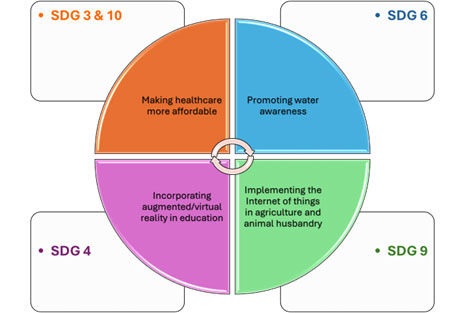
Science, Technology, and Innovation Hub (STI Hub) is aimed to improve the socio-economic conditions of concerned population through various interventions. STI-HUB at Chitkara University is a venture catalyzed by DST (Department of Science & Technology) and executed by CHITKARA UNIVERSITY, Punjab, aimed towards improving the socio-economic conditions of the ST (Scheduled Caste) community in district Patiala, Rajpura Block. In pursuit of this objective, the university focused on four distinct areas and every vertical is mapped with to one of the 17 UN SDGs:
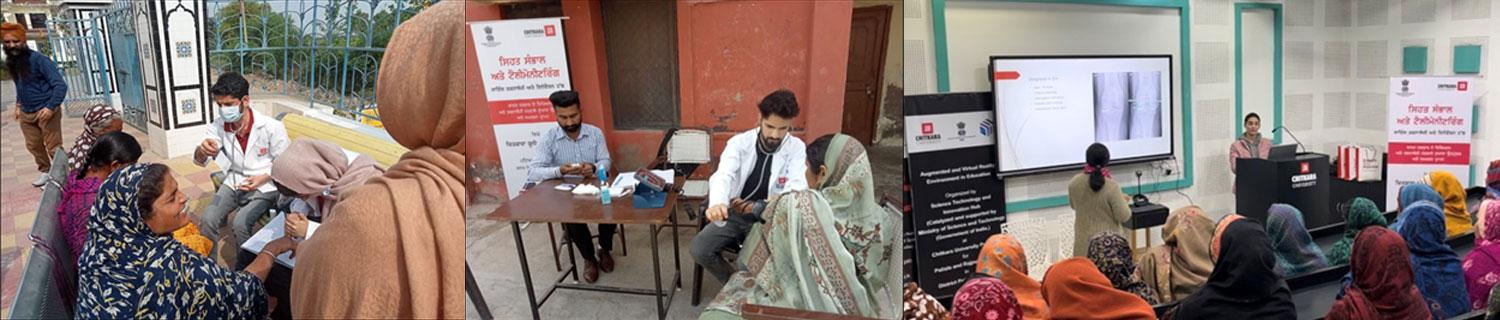
Access to healthcare is a marker of economic and social status. Free healthcare can provide an equal opportunity for everyone to receive medical attention, regardless of their financial status. It can help to reduce the income inequality gap while creating a healthier society. Within the realm of affordable healthcare, a remote diagnosis system called E-Dispensary has been created. This system links patients residing in remote areas with specialized doctors. As a result of this initiative, 41 health-related activities were carried out, providing health benefits to over 495 beneficiaries.
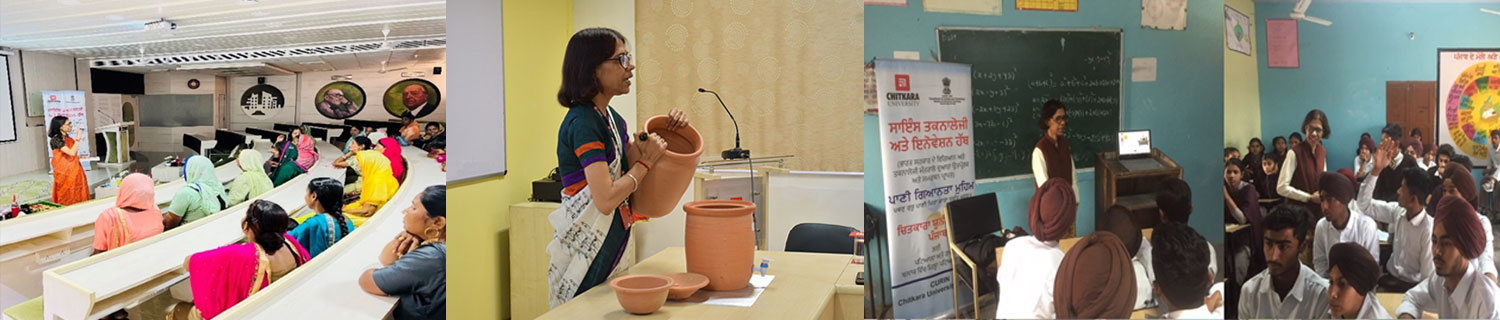
The second vertical was emphasized on disseminating awareness on how to purify drinking water. Impure drinking and agriculture water is a major concern in rural areas of district Patiala. Raising awareness, conducting timely tests on water bodies and sources, and devising inexpensive filtration units can effectively address the issue of water pollution. Under this vertical one prototype named Swach Neer was developed using rice husk ash. Swach Neer is a specialized earthen pot for purifying water.
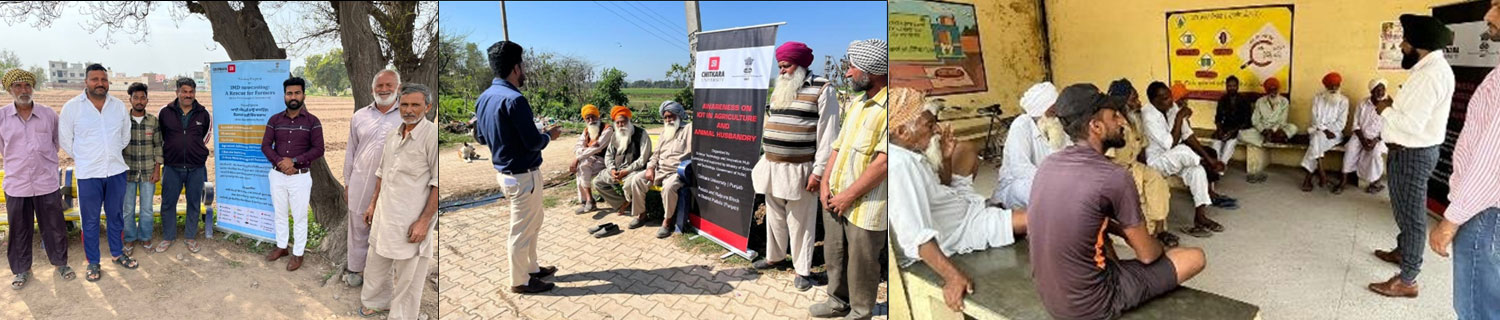
The third sector employs the Internet of Things to enhance productivity in agriculture and promote sustainable milk production. University also signed an MoU with IMD (India Meteorological Department) to disseminate timely weather information in a regional language to beneficiaries.
Equity and access in primary and secondary education is a major concern in this district. Another problem is the engagement of students in the classes and schools. Under the fourth vertical, beneficiaries were taught through AR/VR technologies to resolve these issues.
